
Traditional Lath & Plaster
Lath and plaster specialists with vast experience on Grade I and II listed buildings: surveying, repairing and reinstating original lime plasterwork across London.
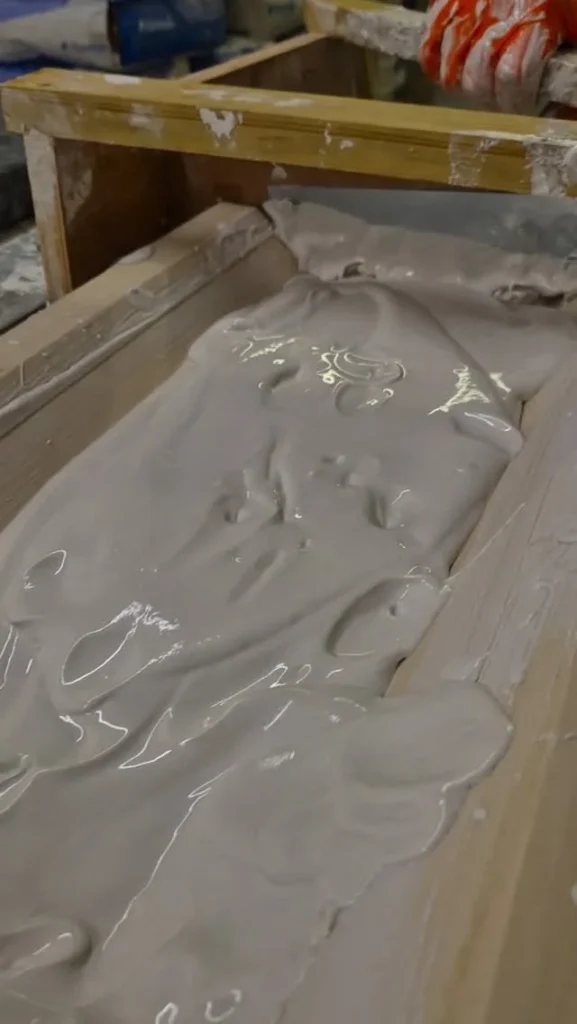
Lath and plaster specialists
Ovolo London Ltd is fortunate to have a vast experience working on Grade I and II listed buildings. We are often requested to survey homes where original plasterwork has been damaged due to water ingress, as an example. We are able to assess the damage, and then offer a solution to repair and restore the area(s) in question.
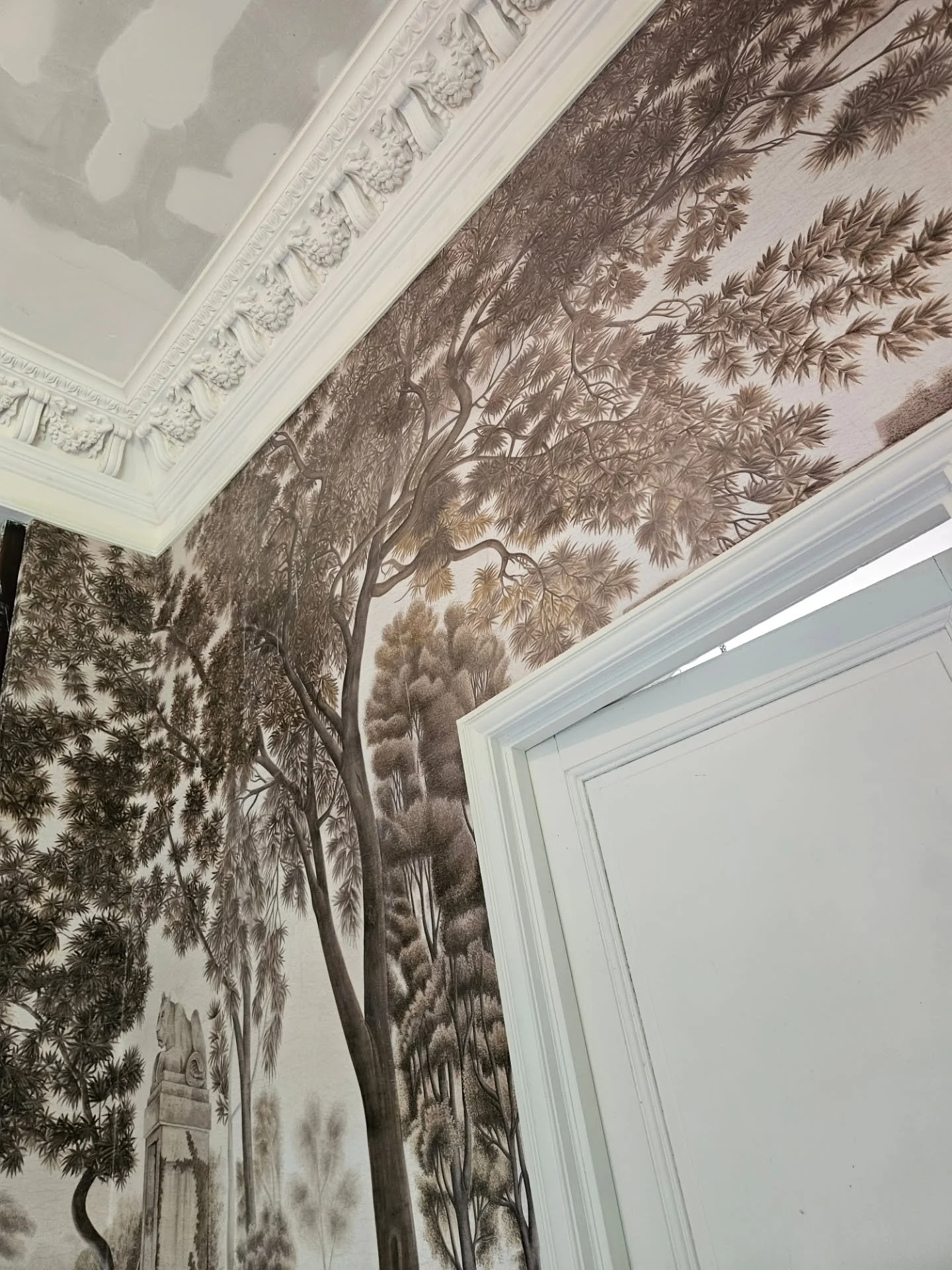
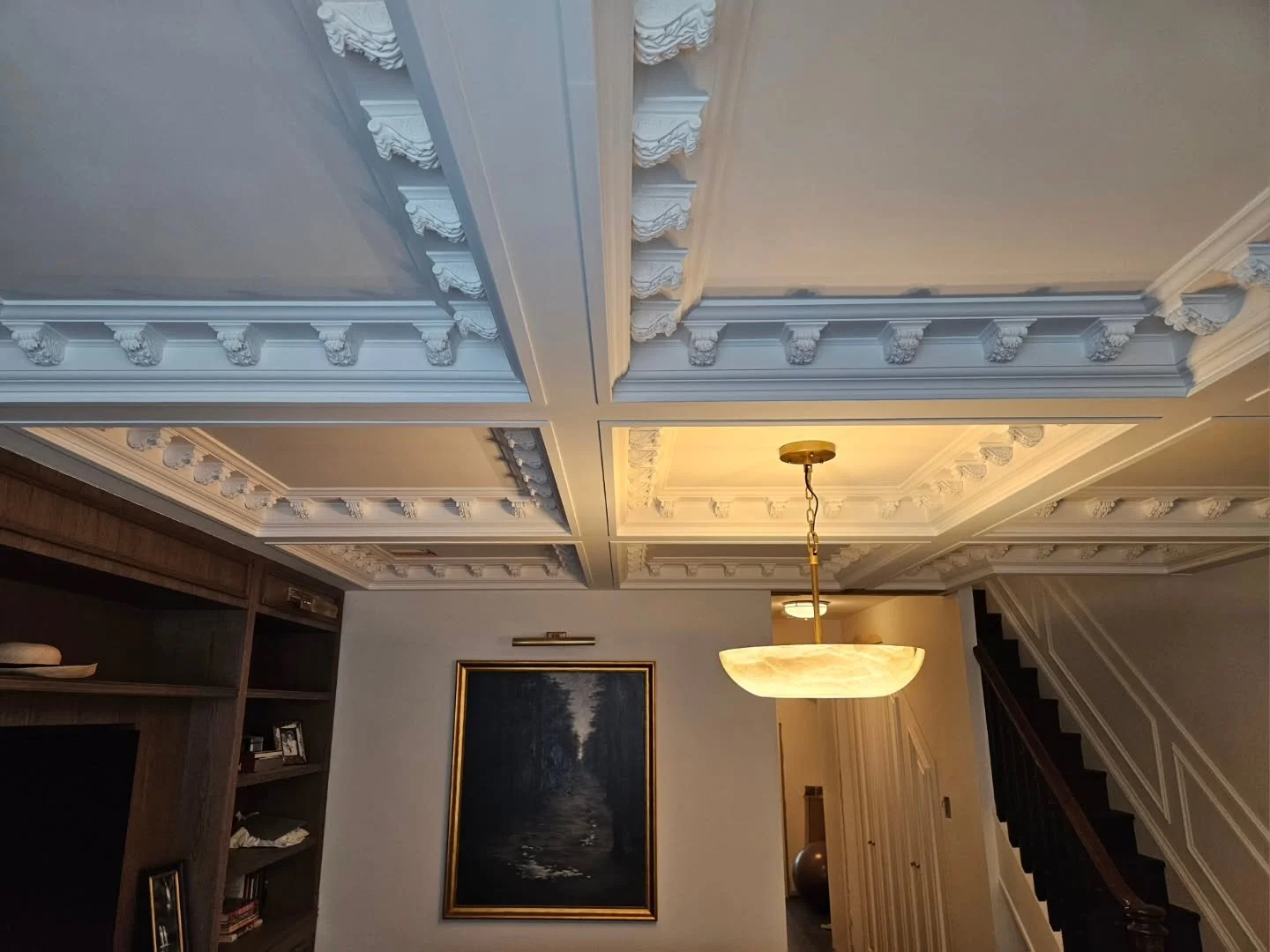
We work alongside insurance companies, conservation officers, architects and builders to co-ordinate realistic work schedules. You can see examples of completed restorations in our portfolio, and where original mouldings are clogged with paint our cornice paint removal service often runs alongside structural repairs.
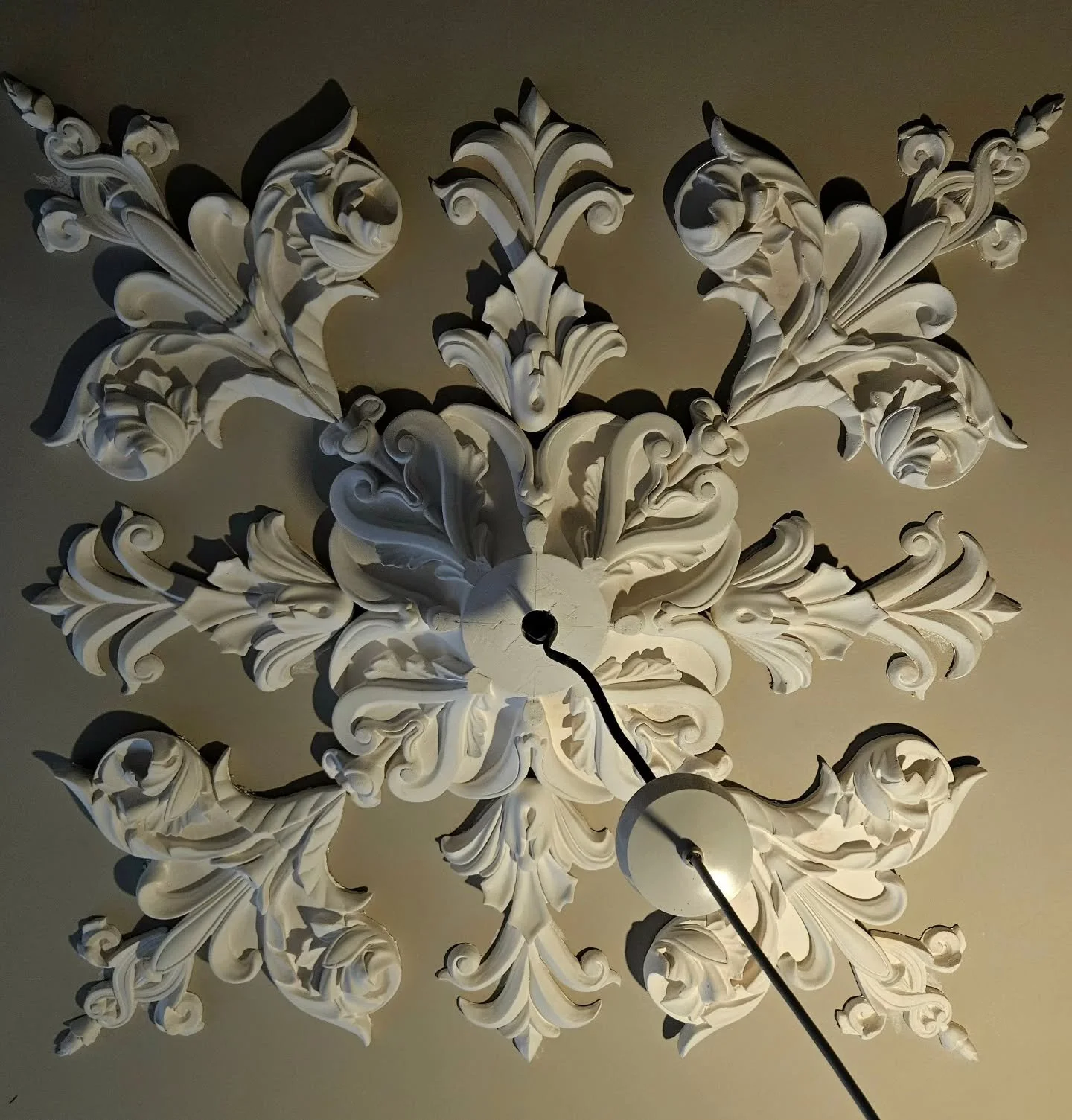
Once the fabric is sound we can reinstate period cornice and ceiling roses to match what was originally there, or talk to us about a full survey.
Three coats, the traditional way
Traditional lath & plaster dates back to the early 18th century: thick timber laths are fixed to the joists, then three coats of lime plaster are applied in order.
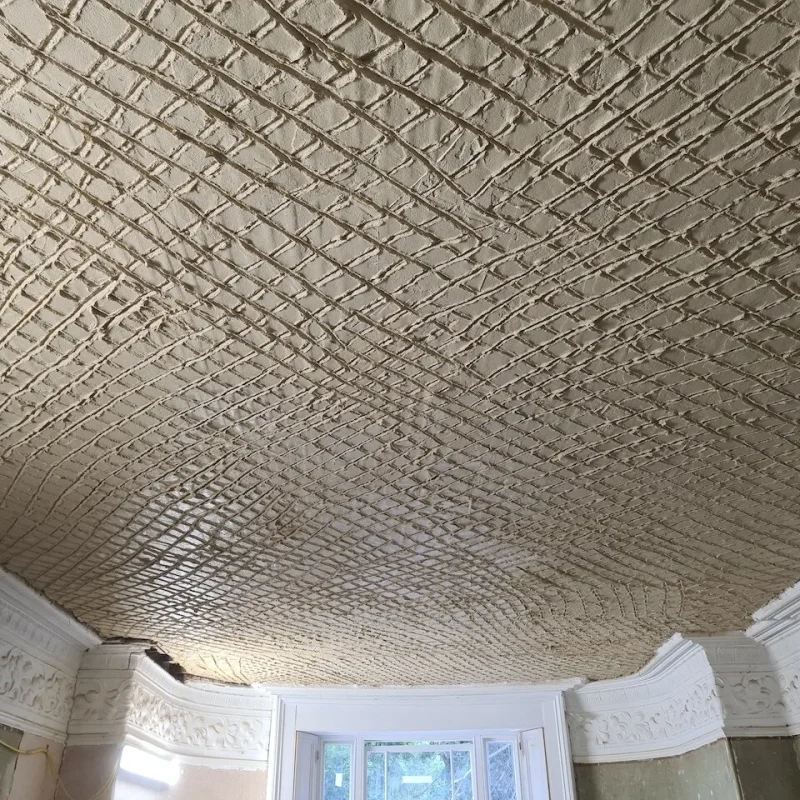
Pricking coat
A coarse lime plaster with hair: the fibre adds strength. The plaster is pushed through the laths so it curls behind them to hang.
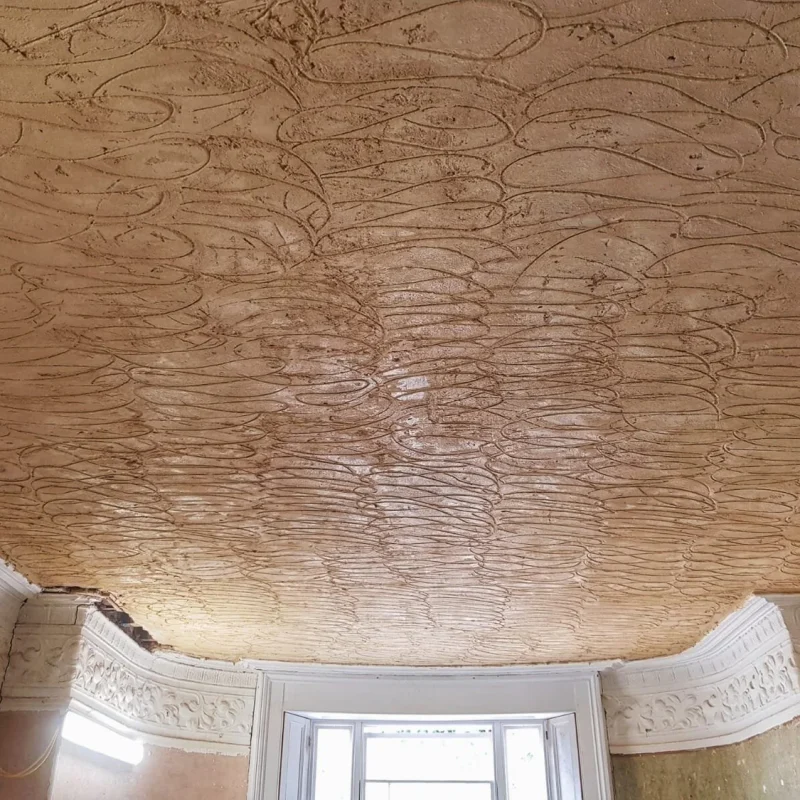
Floating coat
A medium/coarse lime plaster, levelled with a rule then floated and scratched for a finer key ready for the final application.
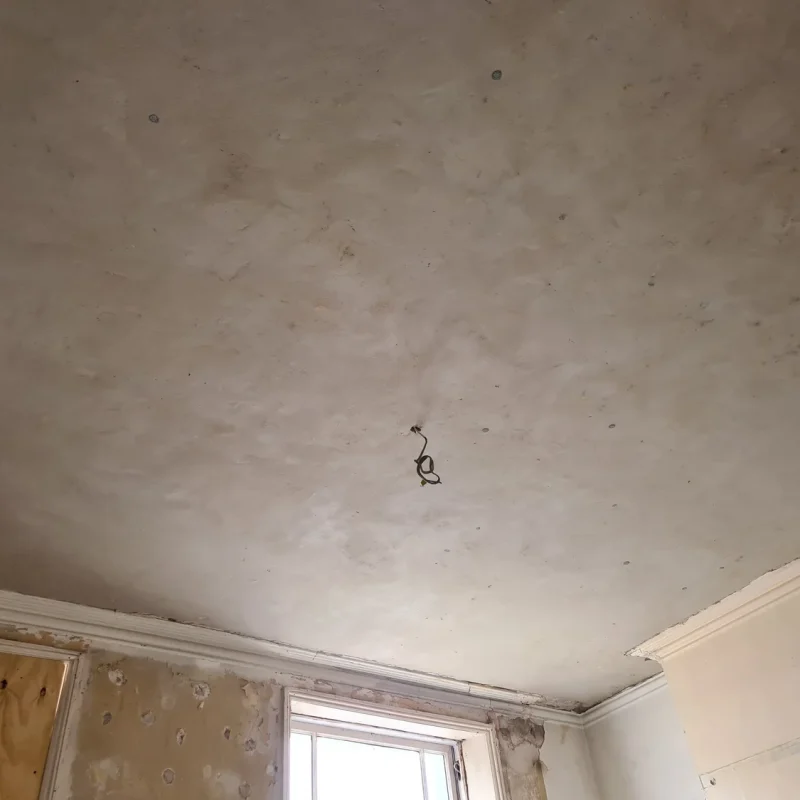
Top coat
A fine lime plaster with sharp sand and no fibres. It gives a wonderful finish, slightly more coarse than a traditional gypsum plaster.
Why lath & plaster still makes sense
Breathable
Lime’s open pore structure allows the minute transfer of moisture, letting solid masonry and timber frames stay dry and function as they should.
Flexible
Excellent flexural strength makes lime best suited to historic timber-framed buildings, working in harmony with the structure through the seasons.
Sacrificial
Lime is designed to be softer than the fabric of the building, providing the ultimate care and protection to the original masonry.
Sustainable
Lime mortar won’t damage masonry when removed, so bricks and stone can be recycled and used again after their previous useful life.

Restoring a listed building?
Talk to us about surveys, insurance works and conservation-approved repairs.
Arrange a survey