
How To Choose The Right Cornice For A Victorian Property
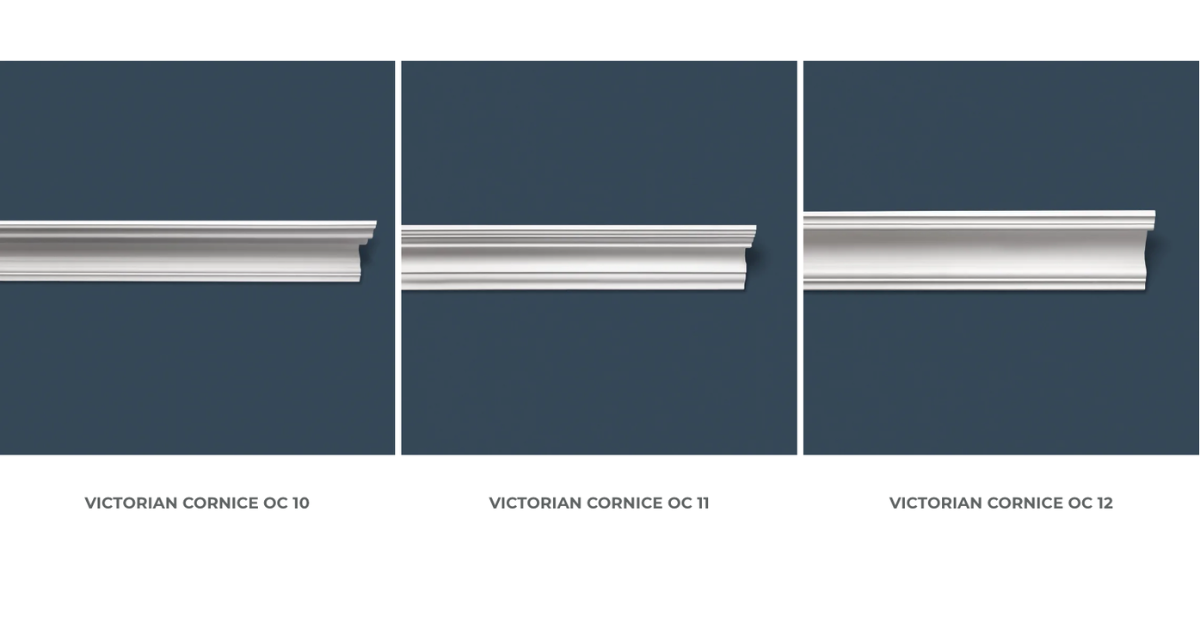
Victorian homes are known for their rich architectural detail, and few features define that character more than cornice.
Whether you’re restoring original plasterwork or adding period-style features to a renovation, choosing the right cornice is essential if you want the finished space to feel authentic.
When decorative plasterwork is done well, the room feels cohesive, elegant, and true to its heritage. Here’s how to make the right choice.
Understand what defines Victorian cornice
Victorian cornice is typically more decorative and substantial than earlier styles. Unlike the restrained elegance of Georgian design, Victorian interiors embraced detail, depth, and visual impact.
Common characteristics include:
-
Larger, more pronounced profiles
-
Intricate patterns such as leaves, florals, or scrolls
-
Layered mouldings for added depth
-
Strong shadow lines to enhance ceiling height
Ceiling roses were often paired with cornice to create a cohesive look, particularly in reception rooms.
Before choosing anything, take time to understand what would have originally suited your specific property. Not all Victorian homes are identical – terraced houses, villas, and townhouses often had different levels of detail.
Match the cornice to the room size
One of the most common mistakes is choosing a cornice that’s the wrong scale.
As a general rule:
-
High ceilings (2.7m and above): Larger, more ornate cornice works well
-
Standard ceilings: Medium-sized designs with moderate detail
-
Lower ceilings: Simpler profiles to avoid overwhelming the space
Victorian properties often have generous ceiling heights, which means they can handle deeper, more decorative cornices. If you go too small, the feature can look underwhelming and out of proportion.
Think of cornice as a framing device: it should feel balanced within the room, not like an afterthought.
Consider the level of detail in the space
Cornice doesn’t sit in isolation. It needs to work with the rest of the room.
Look at:
-
Skirting boards
-
Architraves (around doors and windows)
-
Ceiling roses
-
Wall panelling or mouldings
If the room already includes decorative elements, your cornice should complement, not compete with, them.
For example:
-
Ornate rooms suit richly detailed cornice
-
Simpler rooms benefit from more restrained designs
Mixing overly modern or minimal cornice into a traditional Victorian setting can disrupt the overall aesthetic, so aim to be consistent with your choices.
Choose the right cornice material
If authenticity matters, and in most Victorian properties, it should, material choice is critical.
-
Traditional plaster
-
Offers the most authentic finish
-
Allows for crisp, detailed designs
-
Ideal for restoration and heritage projects
-
Can be repaired and replicated accurately
-
Lightweight alternatives (e.g. polyurethane)
-
Easier and quicker to install
-
Lower cost upfront
-
Less depth and sharpness in detailing
If you’re working on a true period property or aiming for a high-end finish, plaster is almost always the better choice. It aligns with the original construction methods and delivers a far more convincing result.
Restore original cornice where possible
If your property still has original cornice, even if it’s damaged, it’s worth assessing whether it can be restored.
Many issues can be addressed, including:
-
Cracks and small sections of loss
-
Previous poor repairs
-
General wear and ageing
In cases where parts are missing, new sections can often be cast to match the existing design exactly. This approach maintains authenticity and avoids the mismatch that can happen with off-the-shelf replacements.
The guiding principle should be simple: retain what you can, reinstate what you must.
Get the cornice proportions right
Victorian cornice requires attention to proportion in order to look pleasing.
Key things to consider:
-
Projection (how far the cornice extends across the ceiling)
-
Drop (how far it comes down the wall)
-
Relationship to ceiling height and room width
A deeper cornice with a strong profile can make a room feel more substantial, but only if it’s scaled correctly.
Don’t overlook installation quality
Even the best cornice will fall short if it’s poorly installed.
Common issues include:
-
Visible joints
-
Uneven lines along the ceiling
-
Gaps between wall and moulding
-
Loss of detail during fitting
Victorian cornice is designed to be seamless. Achieving that requires precision, especially in older properties where walls and ceilings may not be perfectly straight.
Think about the overall finish
Finally, consider how the cornice will be finished. Traditionally, cornice is painted to match the ceiling, creating a unified look that enhances the architectural detail without overwhelming the space.
Done well, cornice doesn’t just complete a room; it restores the character that makes Victorian homes so desirable.
Explore our cornice collection and ceiling roses, or read about our traditional lath & plaster and restoration services.